Introduction
Analyzing Cycle Ergometer Testing for Aerobic Fitness
Cycle ergometer testing is a widely used method for evaluating aerobic fitness, particularly for estimating maximal oxygen consumption (VO2 max). This post explores different methods for VO2 max estimation, examines intraindividual longitudinal changes in aerobic capacity, and assesses the impact of COVID-19 on heart rate performance during exercise.
Method
Design: Prospective study
Participant: Male, DoB: 1994
Testing Protocols: Study-specific protocols, and the Revise Ekblom-Bak
Equipment: Keiser M-Series M3i cycle ergometer, and Garmin HRM4-Run heart rate monitor
VO2 Max Estimation: Åstrand-Rhyming Nomogram (1954), Siconolfi et al. (1982) Correction, and Revised Ekblom-Bak (2016)
Results
Steady State Heart Rate
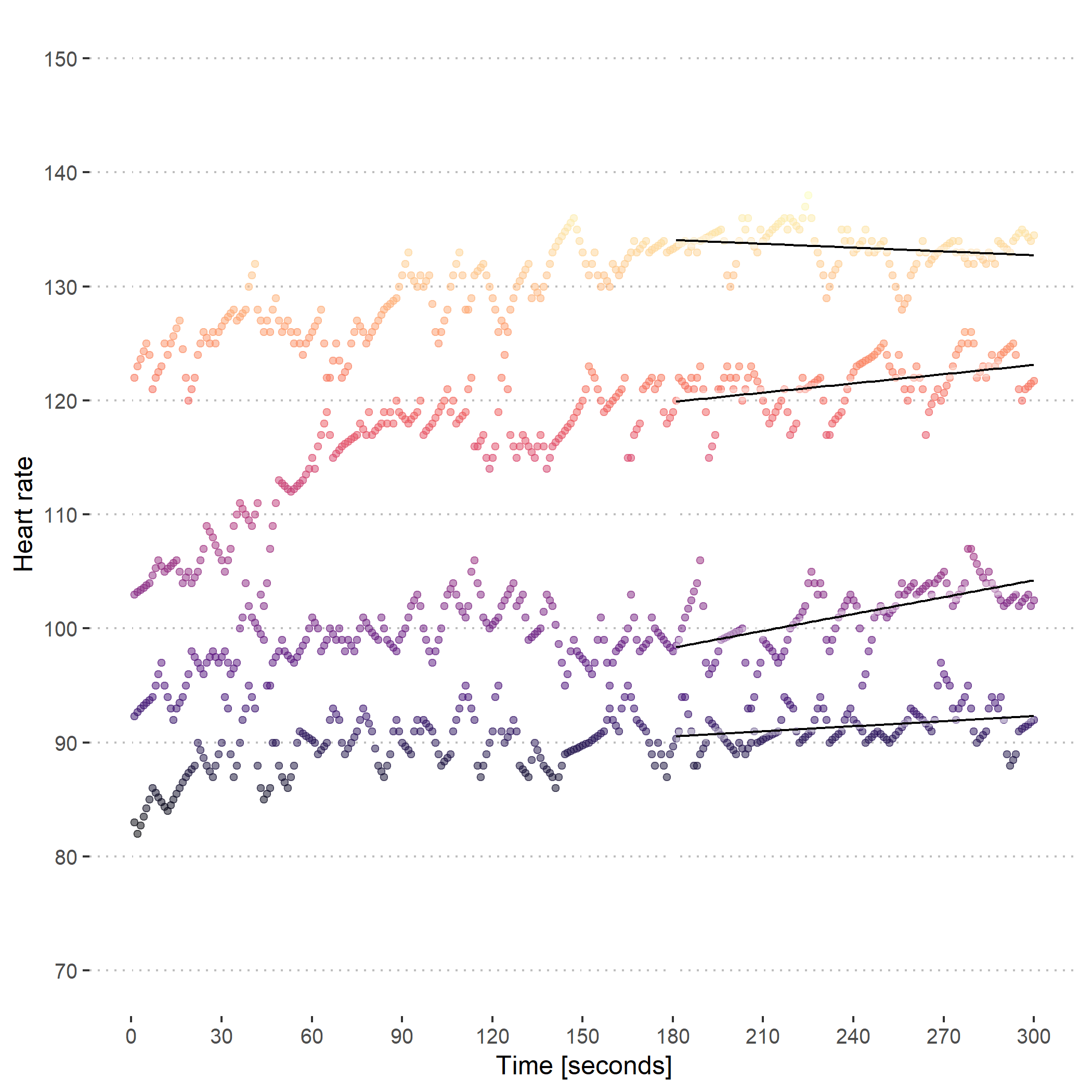
The heart rate graphs (Figures 1-2) demonstrate distinct heart rate curves at different workloads, indicating cardiovascular adaptation to exercise intensity. Heart rates stabilize and reach a steady state as expected during aerobic conditions, with test durations of 30 minutes (Figure 1) and shorter test durations of only 5 minutes (Table 1, Figure 2).
Figure 1: Testing conditions for 30-minute duration at workloads of 60 Watts (26-Aug-2021), 77 Watts (13-Aug-2021), 90 Watts (18-Aug-2021), and 109 Watts (25-Aug-2021).
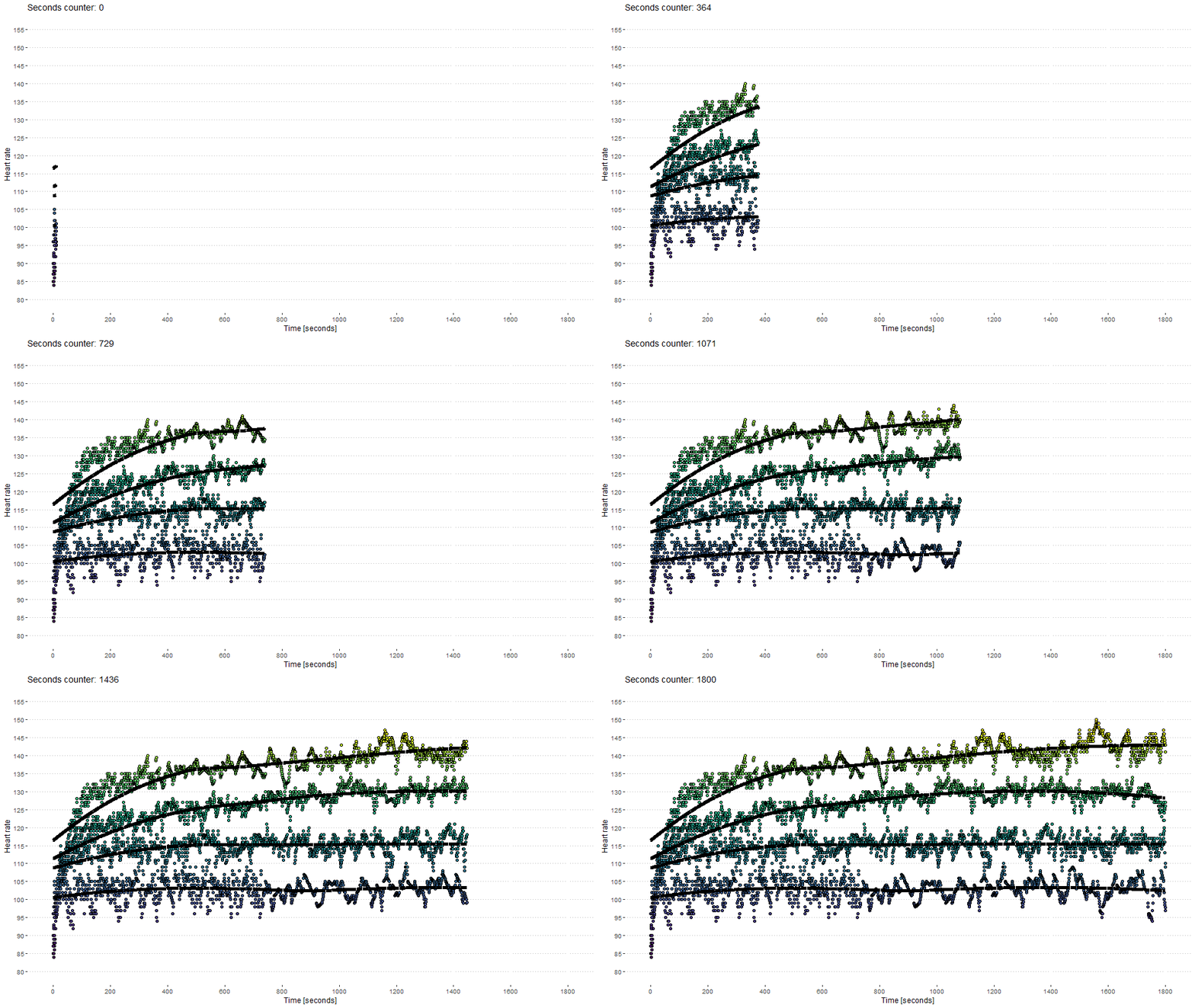
Table 1 and Figure 2: Testing conditions for 5-minute duration at incremental workloads of 33, 59, 74, and 109 watts (9-Aug-2021). Total testing time was 20 minutes.


VO2 Max Estimation
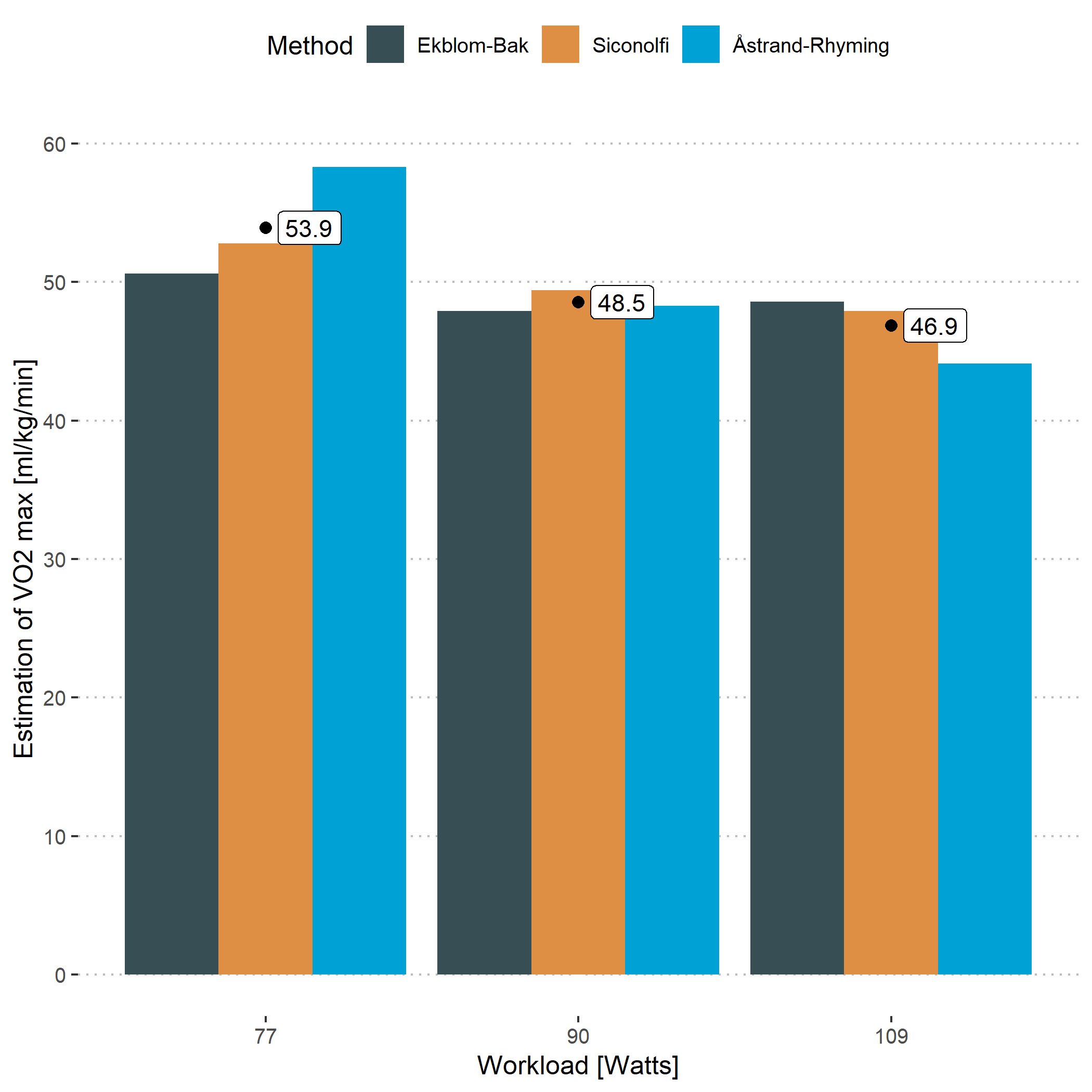
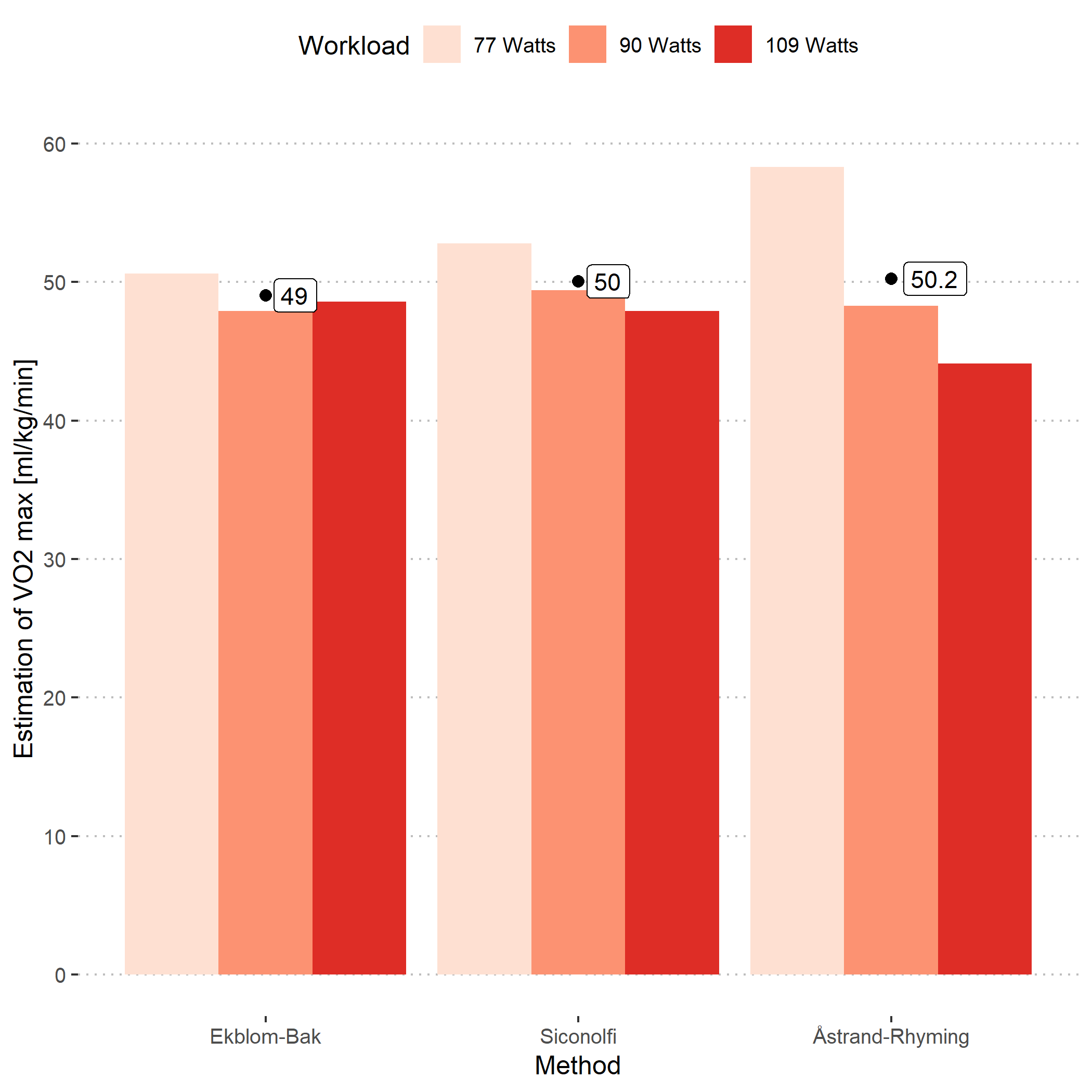
When estimating VO2 max using different analysis methods across various workloads (77, 90, and 109 watts), the results showed some variation depending on the method used (Figure 3):
- Åstrand-Rhyming Method: Produced higher VO2 max estimates at lower workloads, with values ranging from 44.1 to 58.3 ml/kg/min. This suggests potential overestimation at lower intensities.
- Siconolfi Correction: Adjusted estimates ranged from 47.9 to 52.8 ml/kg/min, providing a moderate estimation compared to the Åstrand method.
- Ekblom-Bak Method: Offered the most consistent estimates, varying by only 5.6% across workloads. This stability suggests it may provide more reliable VO2 max predictions across different exercise intensities.
Impact of COVID-19 on Heart Rate Performance
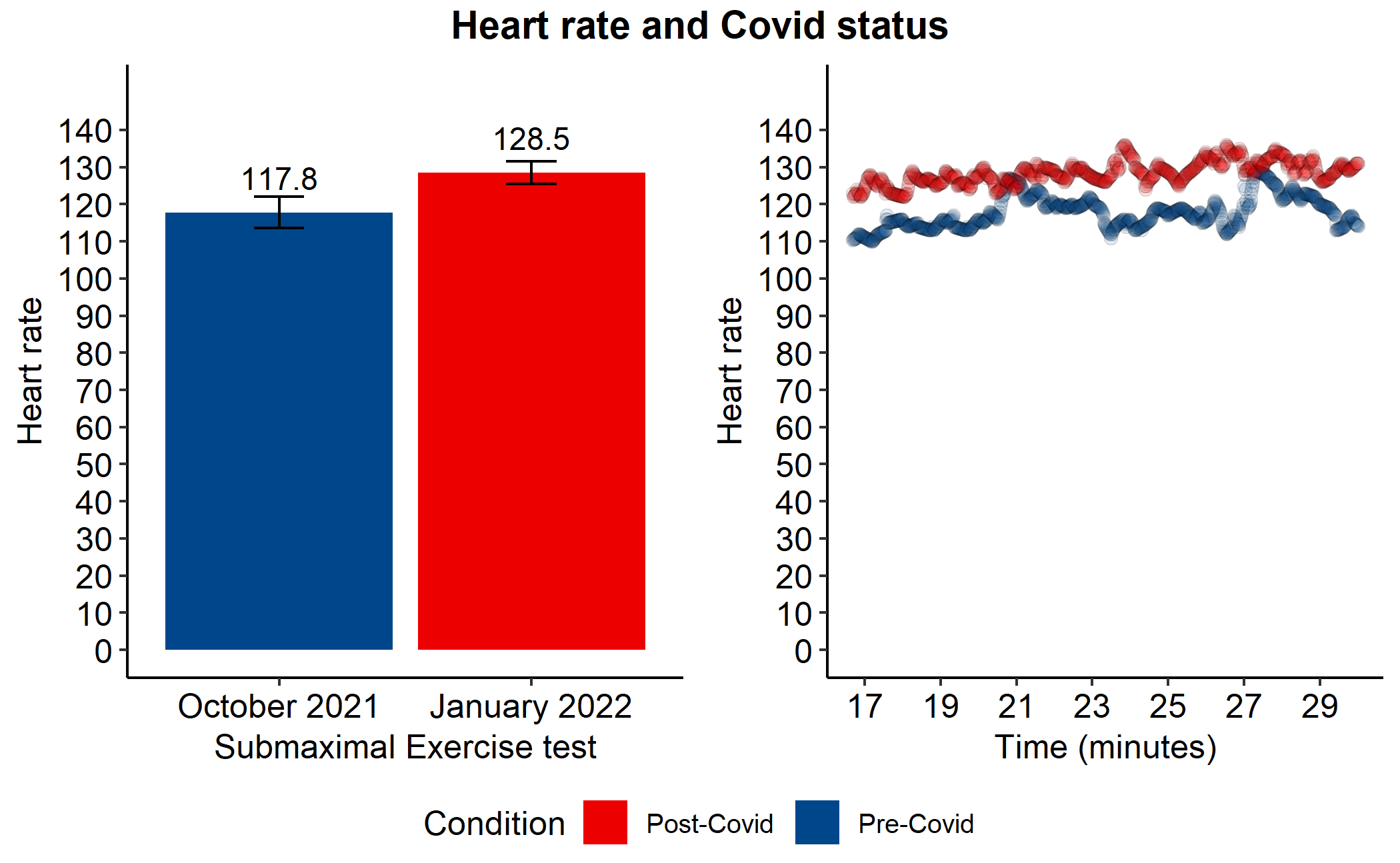
The heart rate analysis post-COVID showed a 9% increase in steady-state heart rate at the same workload, indicating reduced cardiovascular efficiency (Figure 4). This increase could be due to the effects of COVID-19 illness, decreased physical activity, or a combination of both.
Conclusion
This experiment highlights the importance of selecting appropriate testing protocols, workloads, and analysis methods for accurate VO2 max estimation. Among the analysis methods examined, the Ekblom-Bak method demonstrated greater test-retest reliability, making it a preferred choice for assessing aerobic fitness across varied intensities.
Additionally, the impact of COVID-19 on heart rate performance underscores the need for tailored recovery protocols. Post-COVID rehabilitation should focus on gradually restoring cardiovascular fitness to address the declines observed in exercise performance.
By understanding these dynamics, fitness professionals and healthcare providers can better support individuals aiming to regain their pre-illness fitness levels and improve overall aerobic health.
“It should be emphasized that this nomogram is not based on any sophisticated theory, and that the individual’s maximal heart rate originally was not considered in the construction of this nomogram.”
Åstrand, P.O., & Rodahl, K. (1986). Textbook of Work Physiology: Physiological Bases of Exercise (3rd ed.). McGraw-Hill