Introduction
The Macroenvironment
Optimizing the Use of the Animal Database
Effective management of laboratory animal facilities requires systematic tracking of various outcomes of interest to support quality assurance efforts, adhere to 3R principles, and minimize laboratory costs. By utilizing the local animal database, research teams, facility managers, and regulatory bodies can gain valuable insights into the well-being of animals and the efficiency of facility operations. The database can be used to monitor the prevalence and duration of animal isolation, assess breeding efficiency by tracking the number of litters per breeding female, time intervals between litters, litter size, and pup mortality rates. It also ensures compliance with legal requirements, such as verifying that all animals have an ethical permit attached. Additionally, the database can help verify correct cage classification for accurate billing, estimate animal technician workload to reduce the risk of overwork, and to identify missing data where completeness is crucial. Furthermore, it enables examination of euthanasia reasons and the early identification of strains that start to develop negative phenotypes.
To demonstrate how these tools could work in practice, I have developed a series of video demonstrations showcasing the capabilities of custom scripts designed to optimize data tracking and analysis:
Full report (.pdf) for individual research teams. Data are simulated for demonstration purposes and do not represent actual records.
Estimating workload (.xlsx). Data are simulated for demonstration purposes and do not represent actual records.
Identifying overcrowded animal racks (.png). Data are simulated for demonstration purposes and do not represent actual records.
Examining euthanasia reasons by strain and year (.png). Data are simulated for demonstration purposes and do not represent actual records.
Extracting a list of all isolated animals and their isolation duration (.xlsx). Data are simulated for demonstration purposes and do not represent actual records.
The Microenvironment
Fostering a Healthy Social Environment
While maintaining a colony of laboratory animals, it’s important to ensure that their living conditions are as good as possible to prevent unnecessary stress (Würbel H., 2001). Unnecessary stress not only affects research results but is also highly unethical.
Mice behavior, like human behavior, is influenced by their social environment and the amount of space they have. Socially starved (isolated) mice fare worse on some outcome measures than those engaging in social activities with other mice (Ma et al., 2011; Farbstein et al., 2021). Given the choice between isolation and living with other mice, mice will generally choose the latter (Van Loo et al., 2004). The main reason isolation is sometimes allowed in animal research context is if it’s motivated by the experimental methods and approved by the ethical permit, or to prevent excessive fighting. Allowing fighting to continue results in injuries and distress to the mice, which may end up requiring euthanization, thereby wasting research mice. Conversely, having too many mice in one cage can lead to overcrowding, increased stress, and altered normal behavior (Laber et al., 2008).
Some researchers speculate that optimizing the social environment, such as determining the ideal group size, can reduce fighting compared to ‘sub-optimal’ alternatives. For instance, Van Loo et al. (2003) suggest that three mice per cage is better than five or eight, arguing that larger group hierarchies are more unstable and result in more fighting. However, Lidster et al. (2019) found the lowest odds ratios (OR = 0.389, p = 0.014) for fighting in cages of five mice compared to other configurations. Similarly, they showed that fighting was much more common with three mice per cage (OR = 5.166, p < 0.001). While these discrepancies could be due to differences in mouse strain, housing conditions, or handling methods, it ultimately makes it difficult to provide broad recommendations on ideal group sizes for laboratory animal researchers, facilities, or animal caretakers.
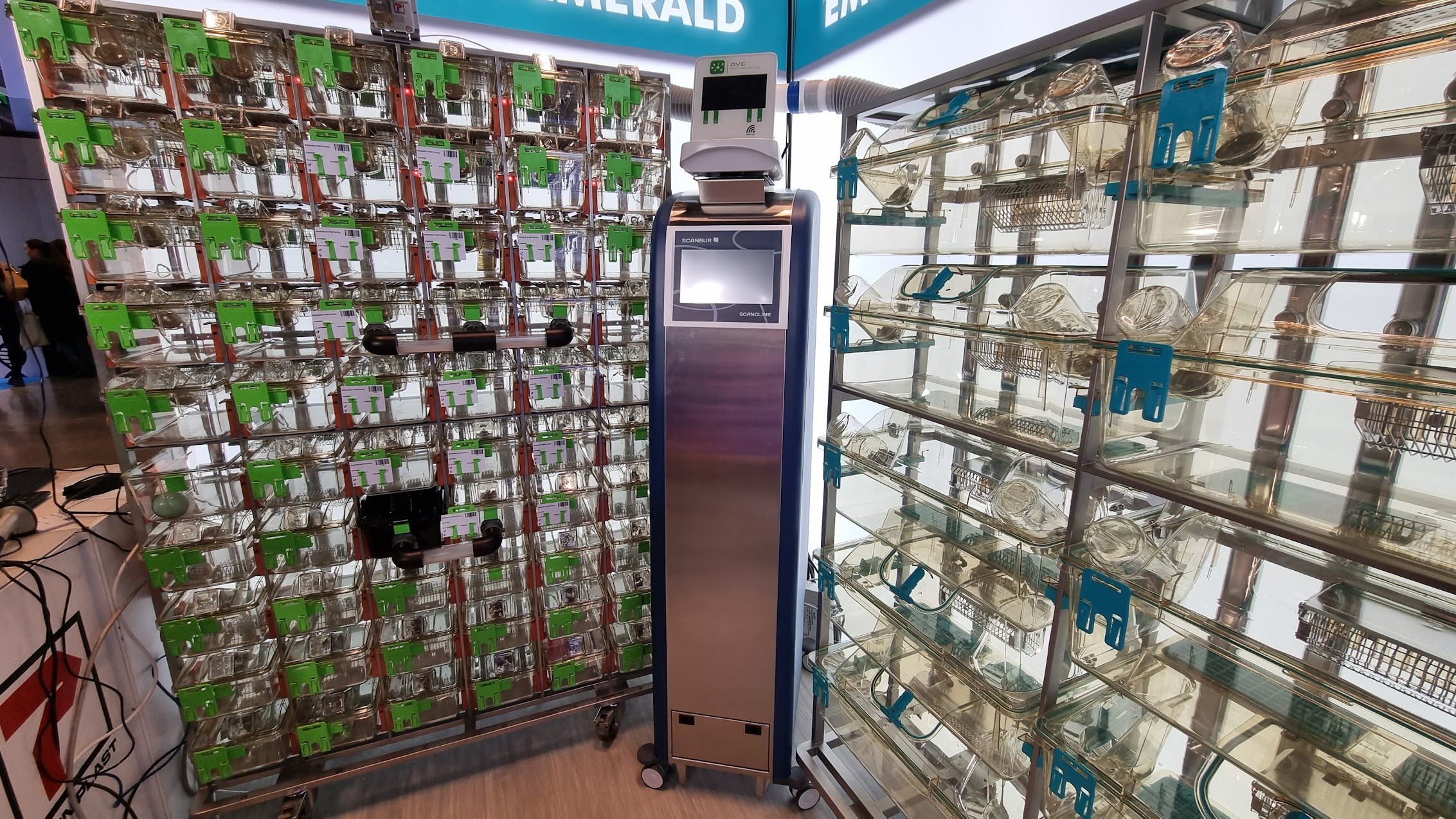
The Role of Enrichments for Laboratory Animal Welfare
While humans may prefer buying already assembled furniture, mice prefer to build their nests using enrichments such as shredded paper, cotton strings, and wood shavings (Olsson et al., 2002). High-quality enrichments are beneficial for mice, reducing anxiety-like behavior, mitigating stress responses to unpleasant events, and increasing natural killer cell activity (Benaroya-Milshtein et al., 2004).
Researchers have also investigated the effect of enrichment on the incidence of fighting, but similar to the topic of group-size, most results are inconclusive. Nesting material has been found to 1) reduce fighting (Armstrong et al., 1998; Loo et al., 2002), 2) increase fighting (Kaliste et al., 2006), and 3) have no effect on fighting (Eskola et al., 1999, Gaskill et al., 2017). Likewise, shelters (such as a paper tunnels or plastic houses) has been found to A) reduce fighting (Kaliste et al., 2006), B) increase fighting (Van Loo et al., 2003), and C) have no effect on fighting (Swetter et al., 2011; Gaskill et al., 2017). The observed effect could perhaps be dependent on the type of nesting material, and modified by group-size, mouse strain, other housing conditions, and handling methods. Nevertheless, the research is currently unclear on how certain enrichments will influence the incidence of fighting.


References
Armstrong, K. R., Clark, T. R., & Peterson, M. R. (1998). Use of Corn-Husk Nesting Material to Reduce Aggression in Caged Mice. Contemporary topics in laboratory animal science, 37(4), 64–66.
Benaroya-Milshtein, N., Hollander, N., Apter, A., Kukulansky, T., Raz, N., Wilf, A., Yaniv, I., & Pick, C. G. (2004). Environmental enrichment in mice decreases anxiety, attenuates stress responses and enhances natural killer cell activity. The European journal of neuroscience, 20(5), 1341–1347. https://doi.org/10.1111/j.1460-9568.2004.03587.x
Eskola, S., & Kaliste-Korhonen, E. (1999). Aspen wood-wool is preferred as a resting place, but does not affect intracage fighting of male BALB/c and C57BL/6J mice. Laboratory animals, 33(2), 108–121. https://doi.org/10.1258/002367799780578273
Farbstein, D., Hollander, N., Peled, O., Apter, A., Fennig, S., Haberman, Y., Gitman, H., Yaniv, I., Shkalim, V., Pick, C. G., & Benaroya-Milshtein, N. (2021). Social isolation in mice: behavior, immunity, and tumor growth. Stress (Amsterdam, Netherlands), 24(2), 229–238. https://doi.org/10.1080/10253890.2020.1777976
Gaskill, B. N., Stottler, A. M., Garner, J. P., Winnicker, C. W., Mulder, G. B., & Pritchett-Corning, K. R. (2017). The effect of early life experience, environment, and genetic factors on spontaneous home-cage aggression-related wounding in male C57BL/6 mice. Lab animal, 46(4), 176–184. https://doi.org/10.1038/laban.1225
Kaliste, E. K., Mering, S. M., & Huuskonen, H. K. (2006). Environmental modification and agonistic behavior in NIH/S male mice: nesting material enhances fighting but shelters prevent it. Comparative medicine, 56(3), 202–208.
Laber, K., Veatch, L. M., Lopez, M. F., Mulligan, J. K., & Lathers, D. M. (2008). Effects of housing density on weight gain, immune function, behavior, and plasma corticosterone concentrations in BALB/c and C57BL/6 mice. Journal of the American Association for Laboratory Animal Science : JAALAS, 47(2), 16–23.
Lidster, K., Owen, K., Browne, W. J., & Prescott, M. J. (2019). Cage aggression in group-housed laboratory male mice: an international data crowdsourcing project. Scientific reports, 9(1), 15211. https://doi.org/10.1038/s41598-019-51674-z
Loo, P.V., Kruitwagen, C., Koolhaas, J., Weerd, H.A., Zutphen, L.V., & Baumans, V. (2002). Influence of cage enrichment on aggressive behaviour and physiological parameters in male mice. Applied Animal Behaviour Science, 76, 65-81.
Ma, X. C., Jiang, D., Jiang, W. H., Wang, F., Jia, M., Wu, J., Hashimoto, K., Dang, Y. H., & Gao, C. G. (2011). Social isolation-induced aggression potentiates anxiety and depressive-like behavior in male mice subjected to unpredictable chronic mild stress. PloS one, 6(6), e20955. https://doi.org/10.1371/journal.pone.0020955
Olsson, I. A., & Dahlborn, K. (2002). Improving housing conditions for laboratory mice: a review of “environmental enrichment”. Laboratory animals, 36(3), 243–270. https://doi.org/10.1258/002367702320162379
Swetter, B. J., Karpiak, C. P., & Cannon, J. T. (2011). Separating the effects of shelter from additional cage enhancements for group-housed BALB/cJ mice. Neuroscience letters, 495(3), 205–209. https://doi.org/10.1016/j.neulet.2011.03.067
Van Loo, P. L., Van Zutphen, L. F., & Baumans, V. (2003). Male management: Coping with aggression problems in male laboratory mice. Laboratory animals, 37(4), 300–313. https://doi.org/10.1258/002367703322389870
Van Loo, P. L., Van de Weerd, H. A., Van Zutphen, L. F., & Baumans, V. (2004). Preference for social contact versus environmental enrichment in male laboratory mice. Laboratory animals, 38(2), 178–188. https://doi.org/10.1258/002367704322968867
Würbel H. (2001). Ideal homes? Housing effects on rodent brain and behaviour. Trends in neurosciences, 24(4), 207–211. https://doi.org/10.1016/s0166-2236(00)01718-5